
NAGTIBBA TREK - ONE HILL AND A BEND AT A TIME
Published 30 Jan 2020 Author Akanksha Dureja
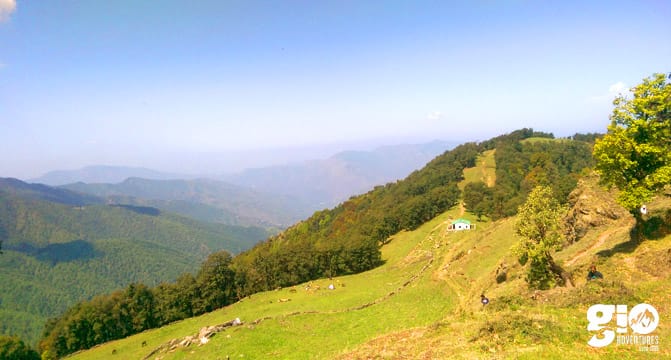
Quick getaways to the Himalayas are not as elusive as they seem. One of the most impressive weekend treks in Uttarakhand, Nag Tibba is an ideal one if you're running out of leaves, yet want to experience a rustic Himalayan adventure on foot. Perfect for a weekend trek, Nag Tibba promises pristine views, snow clad peaks of the Garhwal region, forestscovered in rhododendrons and minty meadows - all in the same trek. The suffusion of different vistas in such a shot span, is the highlight of the trek. Plan this in the peak of winters if you're looking for a snow trek, or in summers if you love that lush carpet of green. Regardless of the weather, a trek to Nag Tibba leaves you mesmerised and wishing it was slightly longer.
Quick getaways to the Himalayas are not as elusive as they seem. One of the most impressive weekend treks in Uttarakhand, Nag Tibba is an ideal one if you're running out of leaves, yet want to experience a rustic Himalayan adventure on foot. Perfect for a weekend trek, Nag Tibba promises pristine views, snow clad peaks of the Garhwal region, forestscovered in rhododendrons and minty meadows - all in the same trek. The suffusion of different vistas in such a shot span, is the highlight of the trek. Plan this in the peak of winters if you're looking for a snow trek, or in summers if you love that lush carpet of green. Regardless of the weather, a trek to Nag Tibba leaves you mesmerised and wishing it was slightly longer.
A couple of hours from Dehradun, the village of Pantwari (100km) is the starting point for the trek to Nag Tibba. With its green terraced fields, Pantwari is a picturesqueprelude to what lies ahead on the trek. The actual base camp for Nag Tibba is a smaller vllage settlement called Kathiyan, around 6km fromPantwari. While the lure of high peaks lies ahead, these two Himalayan hamlets are a photographer's delight and an ideal place to unwind. The simple life of the village in relatively unknown pockets of the mountains is rejuvenating.
Though just a 6 km stretch, the ascend to Kathiyan is a steep one and needs to be maneuvered carefully with firm footing. The stretch from Pantwari to Kathiyan begins with mild terrace farms greeting the trekkers. With paddy or wheat crops swaying to the cool mountainbreeze, you can also spot fruit bearing trees standing tall in these fields. In some places, entire orchards stretch from where one stands. It is difficult to keep away fromfresh, juicy apricots and berries; expect an essential stop-over on account of fruit. Generous locals of the Himalayas don’t seem to mind parting with a handful of berries from their farms to munch on - they taste nothing short of heavenly. Domestic animals like goats and dogs, and chirping Himalayan birds are your constant companions till the boundaries of the village.
Once the village of Pantwari is left behind, the terrain changes dramatically from a domesticated one to one embracing the wild. This is when sweat and sinew feature on the route. Farms give way to untamed bushes, unoccupied mountain huts and lone shepherds walking their battalion of goats or sheep, around in search of munch - worthy pastures. The switchbacks in successionensure that you can't see the villages or their comforting life anymore.One is entirely in the company of wilderness. Rustle of dry leaves below your feet, birds chuntering at tree tops and the whistling wind stay with you from here. Magpies follow you with their melodies, putting a rhythm to footsteps and adding a charm to the otherwisesteep dirt path. Just before Kathiyan, Rhododendron forests welcome the travellers with a flower - laden crimson path, fragrant and serene. Walking this path, one cannot stop wondering how beautiful the Himalayas are, with such complex ecosystems surviving and co-existing within their folds. Soon, the forests lead to lush green meadows, smelling of wild mint leaves that grow here.
Tiredness of a steep uphill climb vanishes when the minty fresh fragrance welcomesone to Kathiyan. This is the base camp for Nag Tibba where trekkers can rest for the night.Kathiyan welcomesone with stunning views, seemingly straight out of a travel postcard. Thelush green valley and beautiful meadows are balm to the eyes. Cold mountain breeze and a cup of steaming hot tea is the perfect combination to forget about weary legs. This stretch can take up to six hoursif rain becomes a constant companion.
I had travelled with Great Indian Outdoors (GIO) in the month of March.We had double the speedbreakers in rain and a hailstorm but it also meant that it wasn't ludicrous to think of snow. Through the next day, the greens were soon replaced with white - but we had nothing to complain.
Day two begins with the ascend to the serpent peak (Nag Tibba). After a short walk through crimson forests, the meadows change colour from green to white, in winters. The higher reaches are sure to have snow. In summers, the scene can be slightly different. If one is hiking in winters, expect magicalwhite scapes. In fact, the entire area looks like a white wonderland. More than that, it is the thrill of standing almost 10000 feet above sea level, with perfect view of the Himalayas. On a clear day, one can see the Bandarpoonch mountain, the Gangotri group of peaks, Kedarnath, the sprawling Doon valley below and the snow peaks of Changabang.
During my trip, it snowed for the entire three hours which we took to reach the peak. Though the trek to the peak was an easy one, walking in snow made it a little difficult. But walking through the slushy snow was rewarded with more than what I could imagine.
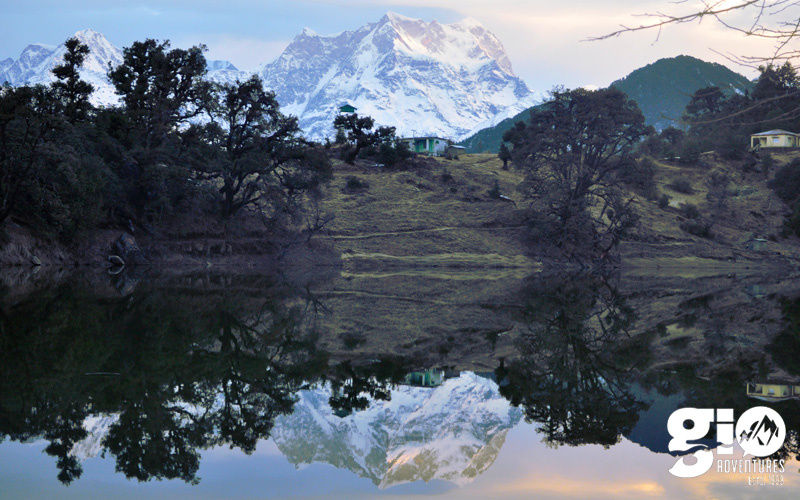
Regardless of the weather, expect breathtaking views from Nag Tibba. The picture is a panorama of mountains stacked behind each other, deep valleys within them and greenery as far as your eyes can see.
This trek remains as one of my most favourite ones ever, and I am already planning to do it again this summer. It's an easy trek, if weather plays along.More than anything else, it offers such a vast variety of terrains in a short span of three days.

Author: Akanksha Dureja
Twitter : @AkankshaDureja
MUST READ
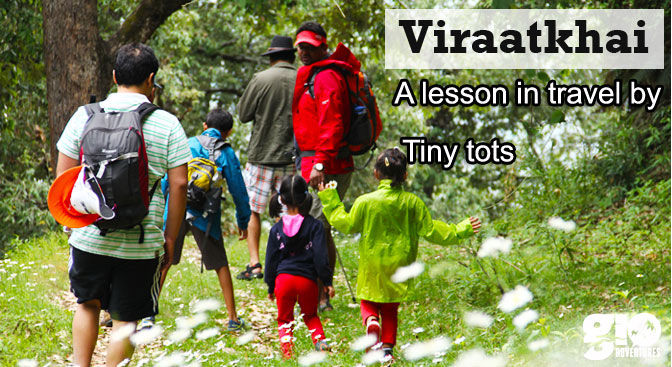
A LESSON IN TRAVEL BY TINY TOTS
Author: Supriya SehgalA LESSON IN TRAVEL BY TINY TOTS
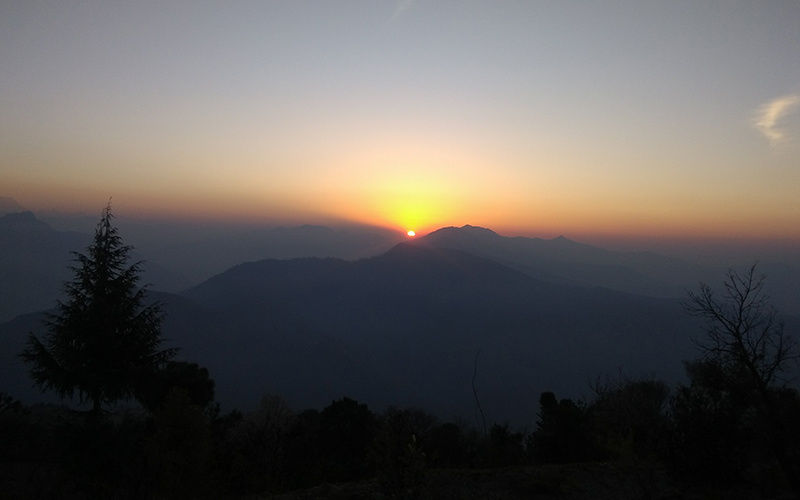
Little joys of Sursingdhar
For a not so enthusiastic traveller it is difficult to take up a step and go to the mountains. However, taking a small plunge never hurt anyone, isn’t it? Even though, I have lived in Dehradun for most of my life, I haven’t travelled to the mountains much. The fear of heights was one of the criteria and to top it, motion sickness makes it worse ...
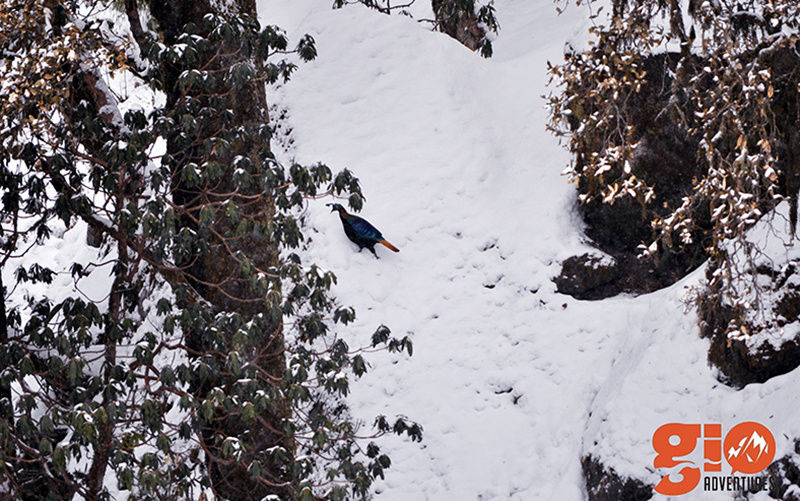
Looking for the blue bird, Monal
There was a time when the famous blue bird of the mountains, the Himalayan Monal, had become scarce. Men, especially from Himachal Pradesh, were hunting down the bird for its beautiful crest. It was believed that a Monal’s feather in one’s cap increased a person’s status and authority. It was only when the government banned the hunting, did t ...
THE PERKS OF BEING A SOLO WOMAN TRAVELLER
Author: Nandini KumarTHE PERKS OF BEING A SOLO WOMAN TRAVELLER
Recognised by Ministry of Tourism, Government of India as an Approved Adventure Tour Operator



Contact Us
 GIO Adventures Pvt. Ltd
Dehradun - Uttarakhand
- +91-7895979211
- info@gio.in